Product context
MyCast&Crew is a hub, not the whole record
Distinguish a personal dashboard, a project workspace, an offer and a timecard before following a record trail.
Read the article : MyCast&Crew is a hub, not the whole recordENTERTAINMENT WORK / PERSONAL RECORDS / CLEAR QUESTIONS · U.S. English
AN INDEPENDENT WORK JOURNAL / VOL. 143
Thoughtful reading for the paperwork side of entertainment work. Understand the document, preserve its context and ask a clearer payroll question.
Read the MyCast&Crew record mapIndependent coverage. Not a Cast & Crew service or account portal.
THE EDITORIAL LINE
We read public documentation and turn it into careful, practical record habits. No copied account screens. No payroll promises. No request for your private documents.
THE ISSUE / NINE ORIGINAL ARTICLES
Read by topic or follow the trail from product context to timecards, pay documents and the questions that remain.
9 articles
Product context
Distinguish a personal dashboard, a project workspace, an offer and a timecard before following a record trail.
Read the article : MyCast&Crew is a hub, not the whole recordPay records
Use document identity, work period and line-item questions to make a pay-stub review more useful.
Read the article : Read the pay stub before comparing the totalTime records
Separate observed work facts, submitted time and approval status without guessing at pay rules.
Read the article : Keep the workday attached to the timecardYear-end records
Track the issuer, year, version and open questions around W-2 documents while leaving tax treatment to qualified guidance.
Read the article : Build a tax-document index, not a tax conclusionWrap habits
Create a bounded personal record index after a production without taking confidential project material with you.
Read the article : A useful wrap folder is smaller than a file dumpProfile literacy
Keep contact changes, paperless preferences and historical document questions separate.
Read the article : An address update and a delivery choice are differentClear questions
Organize a specific record question without sending a whole personal file or treating an editor as payroll support.
Read the article : Make the payroll question easy to routeDocument habits
Distinguish copies, issuer corrections and personal notes while preserving the source record.
Read the article : A second download is not automatically a correctionSafer reading
Recognize the boundary between independent editorial reading and official account actions or sensitive records.
Read the article : Keep the journal separate from the account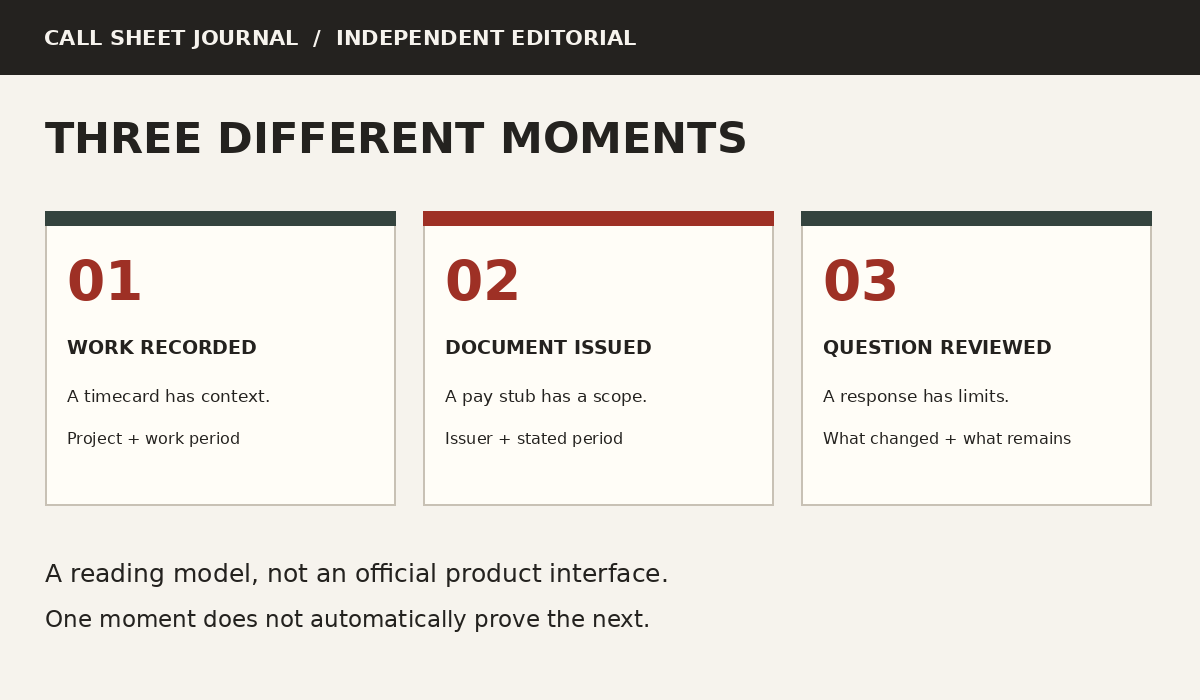
THREE DIFFERENT MOMENTS
A timecard, a pay stub and a resolved question tell different parts of the story. Keep their roles separate.
Read the pay-stub note ↗THE PRACTICE PAGE / FICTIONAL NOTES ONLY
Read a fictional note and mark only what it actually establishes. This is an evidence-reading exercise, not a payroll assessment. No real names, amounts, identifiers or documents belong here.
Evidence labels: document means source record; scope means project or issuer; event means relevant period or workday; next means authorized review route.
Reset or reload clears choices and results. This exercise does not connect to Cast & Crew, inspect a record, calculate pay or change an account. Read the payroll-question guide for the broader method.
KNOW THE BOUNDARY
For current product instructions, use the official Cast & Crew Help Center. For account or payroll assistance, start with its official contact page. We cannot view or change your account.
No passwords, tax forms, bank details or employee records belong in this journal.